Introduction to Labour Shed Prefabricated Structures
Labour shed prefabricated structures have transformed how construction companies approach worker accommodation on large-scale projects. These modular, factory-built dormitory and amenity blocks arrive at project sites ready for quick installation, eliminating weeks of on-site masonry work and enabling contractors to house their workforce faster than ever before.
The demand for prefabricated labour sheds has grown significantly across India since the early 2010s. Heavy infrastructure projects—highways connecting major cities, metro rail networks in urban centers, sprawling industrial parks, and massive residential townships—all require thousands of workers who need safe, temporary accommodation close to the building site. Traditional construction methods simply cannot keep pace with the rapid mobilization timelines these projects demand. Prefabricated buildings are often more cost-effective than traditional construction due to reduced labor and material waste.
Portable Office Cabin operates as an India-based manufacturer and supplier specializing in prefab labour colonies, container offices, and portable toilets. The company serves both private developers undertaking commercial buildings and retail spaces, as well as government EPC contractors executing public infrastructure works. This practical, project-focused approach has made prefabricated solutions the go-to choice for construction industry professionals seeking reliable worker housing.
Portable Office Cabin is a trusted manufacturer and supplier of high-quality portable cabins, container offices, and prefab modular structures in India. The company delivers modern, durable, and cost-effective workspace solutions designed to meet the evolving needs of construction sites, industrial projects, commercial developments, and institutional facilities. With a strong focus on quality materials, smart design, and timely delivery, Portable Office Cabin helps businesses create functional spaces quickly and efficiently.
The quality of prefabricated buildings is often higher due to controlled manufacturing environments.
What Are Prefabricated Labour Sheds?
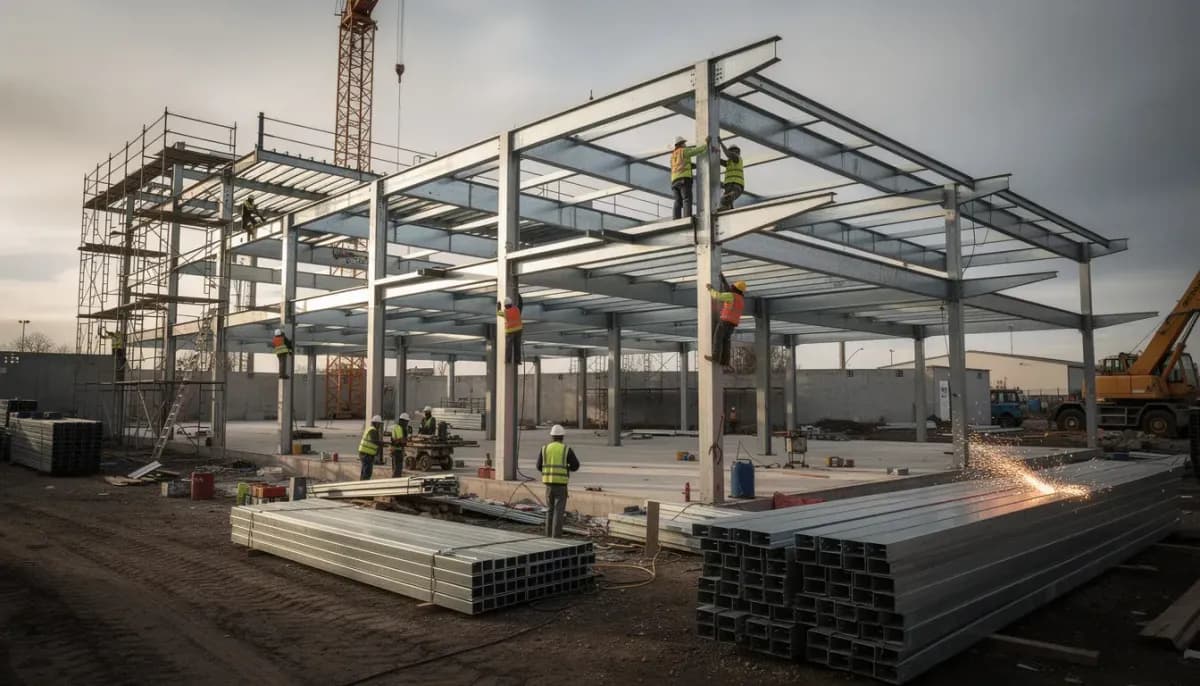
Prefabricated labour sheds represent a fundamental shift in how worker accommodation is constructed. Rather than building structures brick-by-brick on site, these modular buildings are manufactured off site in a controlled environment, then transported and assembled on site using bolted connections and standardized components.
The core elements of any prefabricated shed include steel frames that form the structural skeleton, insulated wall panels providing thermal comfort and durability, roof panels engineered for weather resistance, plus doors, windows, and internal partitions. All these prefabricated components are precision-manufactured in a factory setting before being shipped to the project location.
Typical Configurations Include:
The difference between prefab labour sheds and traditional masonry labour camps becomes clear when examining the construction process. Masonry camps require weeks of foundation work, material sourcing, skilled bricklayers, curing time, and finishing—all happening sequentially on site. Prefabricated structures flip this model: while foundation work proceeds at the building site, wall panels and steel frames are simultaneously manufactured at the factory. When components arrive, assembly takes far less time on site than conventional construction.
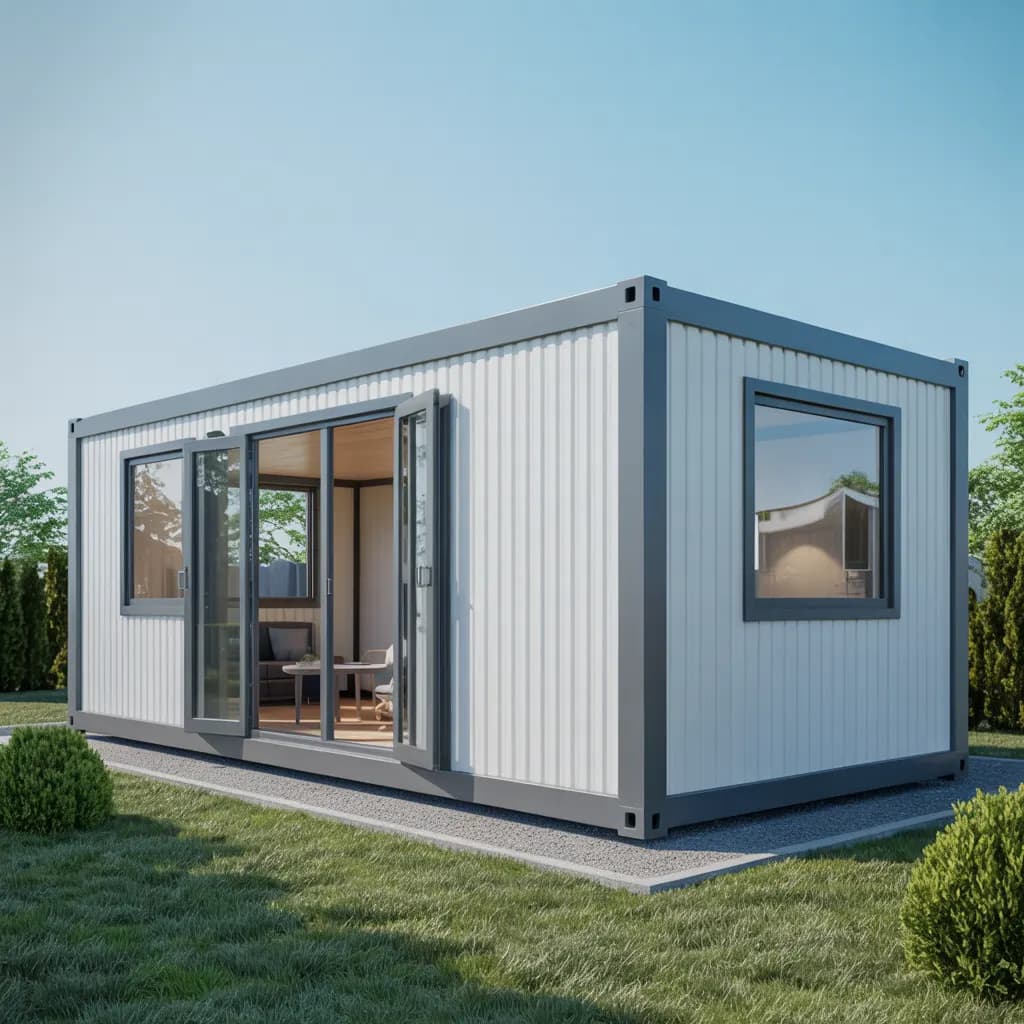
Delivery happens in two primary formats. Knocked-down (KD) panel kits contain all structural elements, panels, and fasteners packed flat for efficient transport by truck. Alternatively, converted shipping containers arrive as near-complete units requiring minimal on-site work. Both formats enable delivery to remote locations across states like Maharashtra, Gujarat, Karnataka, and NCR.
Core Benefits of Prefabricated Labour Sheds
Faster Deployment
Parallel factory and site work shortens installation for a 100-worker camp.
Predictable Pricing
Per-square-foot rates enable accurate budgeting. 20–30% less material wastage than traditional methods.
Quality Assurance
Factory-controlled manufacturing ensures consistent quality impossible to achieve on outdoor sites.
Flexible & Reusable
Modular design supports expansion, reconfiguration, and relocation across multiple project sites.
Time Savings Through Parallel Work Streams
Off-site fabrication fundamentally changes project scheduling. While traditional brick construction requires sequential steps—pour foundation, cure, lay bricks, cure again, plaster, finish—prefab construction enables parallel work streams. The factory manufactures panels and frames while site teams prepare foundations. This overlap cuts deployment time dramatically.
Consider a practical example: installing a 100-worker camp using prefab methods takes far less time from foundation completion to move-in readiness than the same capacity in traditional brick construction, which often runs longer still due to weather delays or material shortages.
Cost Effectiveness and Budget Predictability
Labour costs on construction sites represent one of the largest variable expenses. Prefabricated structures slash these costs by shifting most work to the factory, where skilled professionals work with proper tools and equipment. Fewer workers are needed on site, and those present focus on assembly rather than complex construction tasks.
Material wastage drops significantly when components are manufactured in controlled environments. Factory production allows precise cutting and efficient use of raw materials, reducing the scrap that accumulates with traditional field construction. Many contractors report 20–30% reductions in material wastage compared to brick-built alternatives.
Quality Assurance and Worker Comfort
Factory manufacturing enables quality assurance processes impossible to replicate on construction sites. Every panel passes inspection before shipping. Welds receive proper verification. Finishes meet consistent standards. The result: structures that arrive at site matching specifications exactly.
Worker comfort improves substantially with prefab accommodation. PUF and EPS insulated panels provide superior thermal insulation compared to single-skin brick walls, creating a more comfortable environment even in extreme temperatures. Better acoustic insulation means quieter rest periods.
Safety and Compliance Advantages
Modern prefab labour sheds incorporate safety features that align with regulatory requirements and audit expectations. Fire-rated panel options provide enhanced protection. Electrical systems route through proper conduits rather than improvised site wiring. Clear circulation corridors facilitate emergency evacuation.
Flexibility and Scalability
Project manpower rarely stays constant. Initial earthwork phases might require 100 workers, peak structural work demands 500, and finishing phases scale back down. Prefab labour sheds accommodate this reality through modular design that supports expansion and reconfiguration.
Adding capacity means ordering additional modules. Reducing capacity involves dismantling and storing units for future use—or relocating them to other sites entirely. Multi-storey configurations (G+1 or G+2 stacking) maximize worker capacity when plot area is constrained.
Design & Construction Features of Portable Office Cabin Labour Sheds
Structural System and Framework
The foundation of every Portable Office Cabin labour shed is a galvanized steel framework designed for strength and longevity. Galvanization provides crucial protection against corrosion—essential given India's humid monsoon conditions and coastal project environments. Bolted connections enable quick installation while maintaining structural integrity, and the entire frame system is engineered to meet wind load and seismic requirements applicable across Indian zones.
Panel Options and Insulation
Wall and roof panels represent critical elements determining both comfort and durability. Portable Office Cabin offers EPS (expanded polystyrene) and PUF (polyurethane foam) insulated sandwich panels as primary options. Both provide excellent thermal insulation—essential for maintaining a comfortable living space when external temperatures reach 45°C or plunge during winter nights in northern India. Pre-coated GI sheets form the exterior and interior faces, with color-coated options available.
The insulation layer serves multiple purposes beyond temperature control. It dampens external noise from ongoing construction activities, contributing to better rest for workers. It also resists moisture penetration, preventing mold and degradation issues common in poorly-constructed site accommodation.
Interior Planning and Layout
Interior layouts balance worker comfort against space efficiency. Dormitory rooms typically feature bunk bed arrangements optimized for target occupancy—whether 6, 8, 10, or 12 workers per room. Circulation corridors provide clear pathways compliant with fire safety requirements, and internal partitions create separation between sleeping areas, storage zones, and common spaces.
Building Services Integration
Electrical systems in prefab labour sheds receive proper engineering rather than the improvised wiring common in ad-hoc camps. Distribution boards serve defined zones, LED lighting provides energy efficiency, and ceiling fans ensure air circulation in warm conditions. Plumbing lines connect to water supply systems and drain to septic tanks or STPs depending on project scale.
Durability Features for Indian Conditions
Anti-corrosion coatings protect exposed metal components from rust, particularly important in coastal areas. Waterproof roofing details and properly engineered guttering handle monsoon rains. Flooring options range from cement fibre boards to vinyl or tile finishes depending on budget and project duration. All options prioritize longevity and weather-resistant performance.
Applications of Prefabricated Labour Sheds
Infrastructure Projects
Highways, metro rail, bridges, airports — mobile accommodation that relocates as work fronts advance.
Industrial Plants
Steel plants, cement factories, automotive facilities — meeting corporate safety and quality standards.
Residential & Commercial
Large housing projects and commercial developments with scalable workforce accommodation.
Complete Site Solutions
Consider a typical 300–500 worker camp for a highway construction package. The complete solution extends far beyond dormitory rooms. Kitchen facilities prepare meals for the entire workforce. Dining halls provide covered eating space. First-aid rooms address medical needs. Store rooms secure tools and equipment. Supervisor cabins house site management.
Portable Office Cabin supplies all these elements as prefabricated units, creating integrated camps where every function—from sleeping to eating to working—operates from purpose-designed modular structures.
Beyond Construction Workers
Prefab accommodation serves diverse populations beyond construction laborers. Staff housing for project engineers and managers often utilizes enhanced-specification prefab units. Driver rest rooms at logistics facilities provide comfortable break spaces. Seasonal migrant workers in agro-processing or warehouse operations benefit from temporary housing that can be deployed during peak seasons.
Customization Options
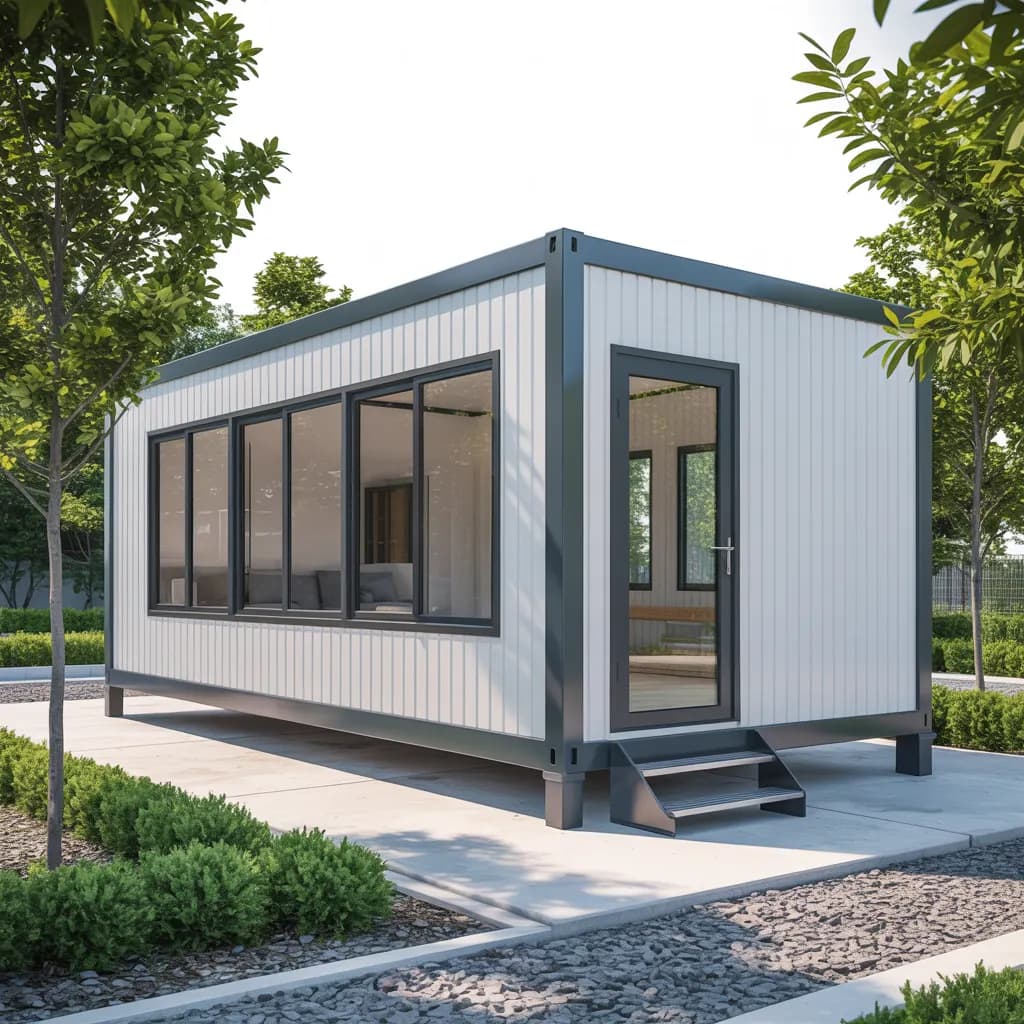
Portable Office Cabin approaches each project as a unique challenge requiring tailored solutions. Rather than offering a one-size-fits-all layout, the company customizes designs based on manpower requirements, site constraints, climate conditions, and specific safety requirements.
Layout Configuration
Single-row, double-row, or G+1 stacking arrangements. Separate blocks for families and single workers with appropriate privacy. Dedicated kitchen, dining, and recreation areas.
Specification Variations
Basic to premium finishes. Variable wall thickness for insulation needs. Single-slope or double-slope roofing. Cement fibre, vinyl, or tile flooring options.
Climate-Specific Engineering
Hot regions: extended roof overhangs, ridge ventilators. Heavy-rain zones: steeper pitches, enhanced guttering. Coastal: superior anti-corrosion coatings. Cold regions: enhanced insulation, double-glazed windows.
Branding & Compliance
Company branding, safety signage, fire-fighting points, CCTV provisions, and first-aid stations for audit compliance with corporate and PSU standards.
Installation, Relocation & Project Timelines
Pre-Installation Planning
Successful installations begin with thorough site surveys. Teams assess ground conditions, access routes for delivery vehicles, available utilities, and specific site constraints. Foundation preparation proceeds based on site conditions—from simple compacted earth to concrete plinths for longer installations.
On-Site Assembly Process
Assembly proceeds rapidly once components arrive. Bolted connections eliminate welding delays and enable work with basic hand tools. Small erection teams—often just 6–10 workers—handle most configurations without requiring heavy equipment. The lightweight nature of prefab components means assembly causes minimal disruption to ongoing construction work.
Relocation Capability
Relocation represents a key advantage. When project phases complete or work fronts advance, structures can be dismantled rather than demolished. Bolted connections reverse easily. Panels stack for transport. At new sites, the same components re-erect with only local foundation preparation and minor replacements—delivering significant cost savings across multi-site contractors.
Why Choose Portable Office Cabin?
Experience Since 2010s
Diverse portfolio across construction, industrial, and government projects.
End-to-End Capability
In-house design, manufacturing, logistics, installation, and after-sales support.
Quality & Sustainability
Durable steel structures, recyclable materials, waste reduction through precise manufacturing.
Versatile Product Range
Portable cabins, security rooms, PEB structures, canteens, container homes, toilets — all from one source.
Construction Process of Prefabricated Labour Sheds
The construction process is designed to maximize efficiency, durability, and adaptability. It begins with a detailed design phase using advanced CAD software, where the specific requirements—layout, shape, and capacity—are mapped out and optimized for both functionality and comfort.
Once the design is finalized, manufacturing takes place in a controlled factory environment. High-quality raw materials such as metal, concrete, and wood are used to construct the core components. Each component—walls, roof panels, doors, and windows—is precision-engineered to meet exact project specifications.
After manufacturing, prefabricated components are carefully transported to the construction site. Thanks to their modular format, these elements can be moved efficiently, even to remote locations. On-site, skilled workers assemble the structure using bolted connections and standardized methods, allowing for quick installation and significantly reducing overall construction time.
Frequently Asked Questions
How many workers can be accommodated in a typical prefabricated labour shed?
Capacity scales modularly based on project requirements. Individual dormitory rooms commonly house 8–12 workers depending on layout and bed configuration. These standardized rooms combine to create colonies accommodating 50, 100, 300, or even 1,000+ workers through repeated dormitory blocks. Portable Office Cabin designs colonies based on detailed headcount briefs from clients.
What is the usual lifespan of a prefab labour shed structure?
Steel-frame prefabricated labour sheds with quality panels can serve 8–15 years or more with proper maintenance. Regular painting protects exterior surfaces. Sealant checks prevent water infiltration. Actual service life varies depending on environment—coastal areas accelerate corrosion, while projects typically use structures for 2–5 years before relocating.
Do prefabricated labour sheds require building approvals or permissions?
Approval requirements vary by jurisdiction. Many municipalities require layout drawings, fire-safety clearances, and documentation demonstrating compliance with basic welfare provisions. Portable Office Cabin supplies standard drawings and technical details to support clients in obtaining necessary permissions.
Can prefab labour sheds include amenities like kitchens, canteens, and first‑aid rooms?
Absolutely. Labour colonies readily integrate specialized prefab units for comprehensive site facilities. Kitchen blocks include cooking equipment provisions, exhaust ventilation, and fire suppression. Dining halls provide covered space with proper seating. First-aid rooms feature wash basins, examination areas, and power points for medical equipment.
What information is needed to get a quotation?
Accurate quotations require: worker headcount and breakdown by category, usage period in months/years, site details (location, access, plot size), specification level (basic/standard/premium), required facilities (dormitories, toilets, kitchen, dining, offices, first-aid), and target timeline. Portable Office Cabin then develops a concept layout with per-square-foot rates.
Conclusion and Future Outlook
Prefabricated labour sheds have emerged as a cost-effective, durable, and highly adaptable solution for accommodating workers across a wide range of industrial projects. Their quick installation, robust construction, and extensive customization options make them a preferred alternative to traditional construction methods. As the construction industry continues to evolve, the demand for these innovative solutions is set to rise.
Looking ahead, advancements in technology and design are expected to further elevate the functionality, durability, and visual appeal of prefabricated labour sheds. With increasing emphasis on compliance, sustainability, and cost effectiveness, these structures are poised to become the go-to choice for construction companies seeking reliable, long-lasting solutions.
For any project requiring rapid deployment, superior durability, and flexible expansion, prefabricated labour sheds from trusted manufacturers like Portable Office Cabin remain the benchmark for quality and performance in the modern construction landscape.