Cargo Containers – Types, Uses & Modular Building
Cargo Containers: Types, Uses & Modular Building Opportunities — comprehensive guide covering GP, High Cube, flat rack, open top, reefer, tank containers and modular building conversions by Portable Office Cabin.
- Brand
- Portable Office Cabin
- Application
- Material & equipment storage, warehousing, logistics, site stores & secure on-site storage
- Steel Grade
- MS CR Sheet / CRCA Sheet — IS 513 & IS 2062 · Corten · ISO-Grade
- MSME Certified
- UDYAM-TN-11-0068545
* Price may vary based on customization and delivery location
Key Features
- ISO-grade corten steel structure with corrugated wall panels for maximum durability
- Available in GP, High Cube, flat rack, open top, reefer, and tank configurations
- Fully convertible to modular offices, container homes, cafés, and labour colonies
- 20 ft and 40 ft sizes with High Cube option for extra volume
- Double door cargo access with locking bars and weather seals
- Corner castings and twist-lock fittings for safe stacking and crane handling
- Temperature-controlled options from +25°C to -60°C for perishables
- PAN-India delivery with crane positioning and installation support
Specifications
| Standard Sizes | 20 ft GP, 40 ft GP, 40 ft High Cube |
| Material | Corten Steel (ASTM A588), Mild Steel (IS 2062), Stainless Steel (AISI 304/316L) |
| 20 ft Payload | 28–29 tonnes |
| 40 ft Payload | 26–27 tonnes |
| 40 ft HC Internal Height | 2.90 m (9 ft 6 in) |
| Construction | Corrugated walls, marine plywood floor, double door access |
| Standards | ISO 668, ISO 1496, CSC 1972 |
| Conversion Options | Offices, homes, cafés, labour colonies, security cabins |
Introduction to Cargo Containers
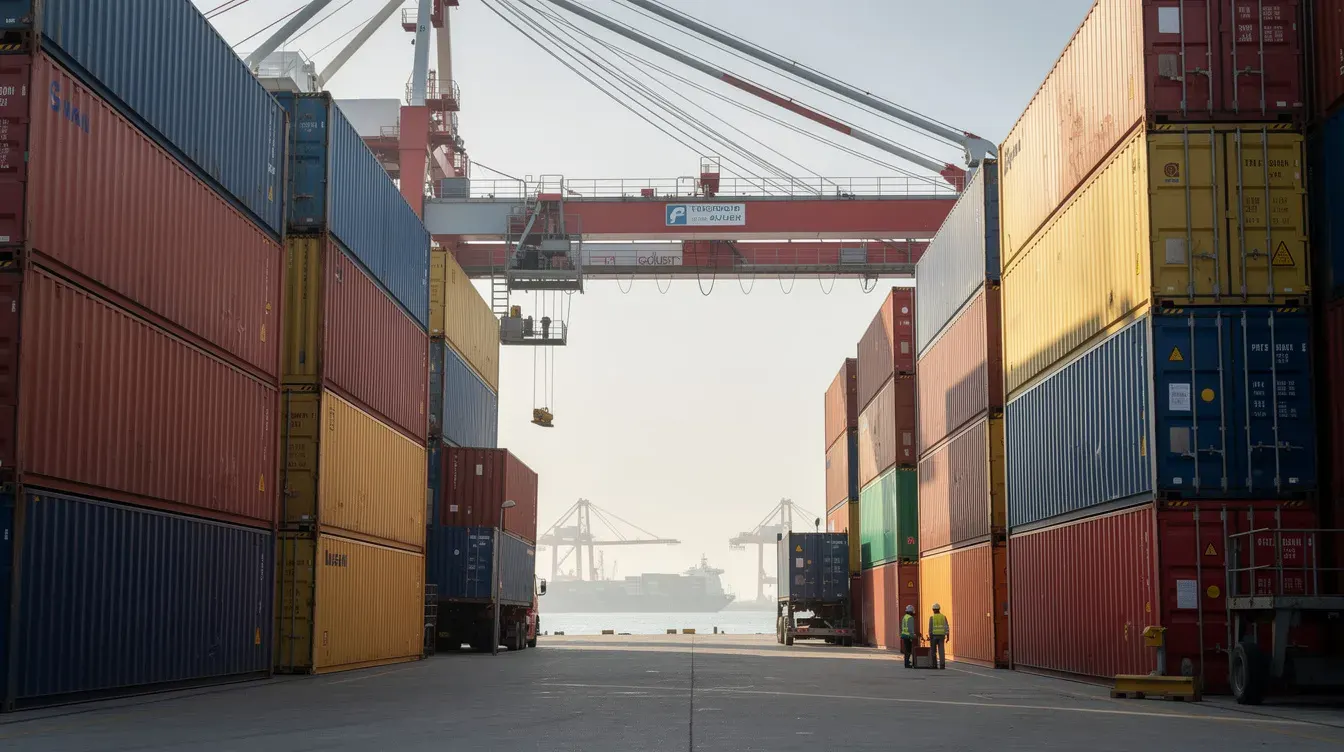
Cargo containers are the steel backbone of global commerce. Since the 1960s, these standardised metal boxes have revolutionised how goods move across oceans, rail networks, and roads. Today, approximately 90% of non-bulk freight travels inside shipping containers, with ports worldwide handling 780 million TEUs in 2023 alone.
The International Organization for Standardization established standard sizes that remain foundational: 20 ft, 40 ft, and 40 ft High Cube units dominate the industry. A standard 20 ft container measures roughly 6.1 metres long, 2.44 metres wide, and 2.59 metres high externally. The 40 ft variant doubles the length while maintaining the same width and height profile.
At Portable Office Cabin, we use the same ISO-grade containers and engineered steel frames as the foundation for modular offices, container homes, and site facilities. The structural integrity that protects goods during sea transport translates directly into durable, relocatable buildings.
| Size | External Dimensions | Internal Volume | Typical Use |
|---|---|---|---|
| 20 ft GP | 6.1m × 2.44m × 2.59m | ~33 m³ | General freight, site offices |
| 40 ft GP | 12.2m × 2.44m × 2.59m | ~67 m³ | Large shipments, container homes |
| 40 ft High Cube | 12.2m × 2.44m × 2.90m | ~76 m³ | Voluminous cargo, premium offices |
Quick Guide: Which Cargo Container Do You Need?
Choosing the right container depends on what you're transporting or building. Here's a practical breakdown to help you make faster decisions, whether you're shipping goods internationally or setting up project infrastructure.
Exporting dry goods from India in 2026
20 ft or 40 ft General Purpose, or High Cube for lighter, bulkier items
Heavy machinery or construction equipment
Flat Rack or Open Top for crane loading
Perishable food, pharmaceuticals, vaccines
ISO Reefer or Super Freezer depending on temperature requirements
On-site office for a 12–24 month project
20 ft or 40 ft Container Office by Portable Office Cabin
Long-term labour accommodation on remote projects
Customised container homes or prefab labour colonies
Rooftop café or canteen on existing building
Structural-checked container café with rooftop shed system
Dense raw materials like ore or scrap
Half-Height containers for stability
Chemicals or liquids in transit
ISO Tank Containers with proper certifications
Standard General Purpose Cargo Containers
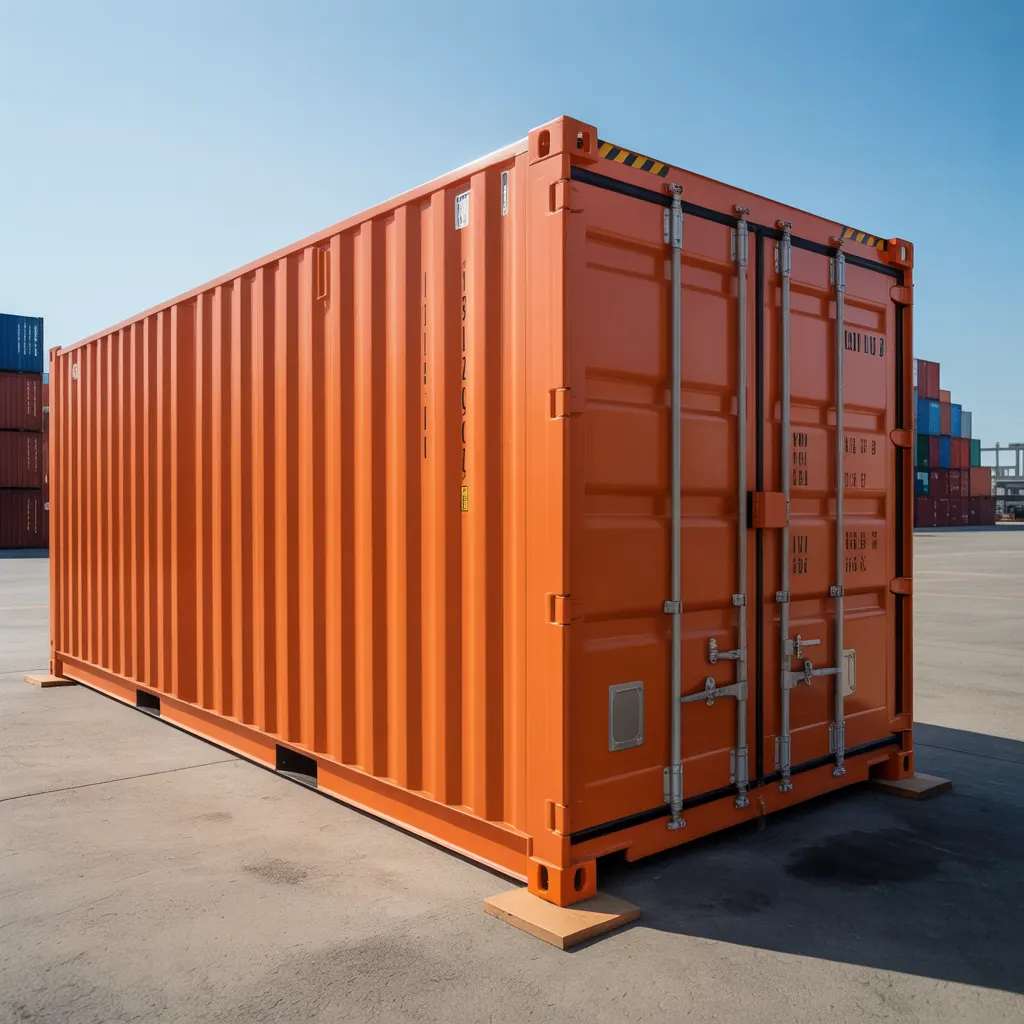
General purpose containers, also called dry vans, are fully enclosed, weather-tight units designed to carry the vast majority of cargo types. They represent approximately 90% of all containers in global circulation.
Dimensions and capacity:
- 20 ft GP: External length 20 ft, width 8 ft, height 8 ft 6 in; payload limit ~28–29 tonnes
- 40 ft GP: External length 40 ft, width 8 ft, height 8 ft 6 in; payload limit ~26–27 tonnes
Construction features:
- Corten steel (weathering steel) structure for corrosion resistance
- Corrugated walls providing structural strength
- Plywood or bamboo floor capable of withstanding cargo pressure
- Double door cargo access with locking bars for complete weather protection
Common cargo: Consumer goods, textiles, engineering components, packaged foods, furniture, electronics, and vegetables. These containers accommodate liner bags for dry bulk commodities and flexi-tanks for certain liquids.
Portable Office Cabin repurposes 20 ft and 40 ft GP containers into portable cabins, container offices, prefab classrooms, security booths, and micro-warehouses—delivering the same structural reliability for building applications.
High Cube Containers for Extra Volume
High cube containers share the same footprint as standard GP units but stand 1 ft taller at 9 ft 6 in (2.90 m). They're mainly available as 40 ft and 45 ft units, offering roughly 13% more internal volume than standard height containers.
Key benefits:
- Extra internal height for bulky but lighter cargo
- Better stacking compatibility on ships and double-stack rail
- Compatible with gooseneck chassis for efficient truck transport
- Commonly used since 2020–2026 for e-commerce, textiles, electronics, and furniture shipments
Why modular builders prefer High Cubes:
- Additional headroom simplifies false ceiling installation
- Better insulation and wiring spaces within walls
- More comfortable interior environments for occupants
- Enables loft storage in container homes
Portable Office Cabin applications using 40 ft High Cube:
- 8–10 seat site offices with conference areas
- Container homes featuring loft storage
- Dual-cabin layouts with internal partitions
- Double-height reception areas by combining two stacked units
Specialised Cargo Containers for Project & Oversize Loads
Not all cargo fits standard boxes. Project cargo, heavy goods, and awkwardly-shaped items require specially designed container solutions. These specialised containers maintain ISO frame dimensions for intermodal compatibility while offering unique loading configurations.
Flat Rack Containers
Strong end walls without fixed side walls, with collapsible ends forming a flat platform for oversize loads.
- • Available in 20 ft and 40 ft sizes
- • Loading capacity up to 40–45 metric tonnes
- • Typical cargo: excavators, generators, steel coils, wind turbine components
Open Top & Hard Top Containers
Removable tarpaulins or steel roof panels for over-height cargo requiring crane loading.
- • Standard 20 ft and 40 ft sizes
- • Industrial boilers, tall machinery, marble blocks
- • Hard top preferred for security and stackable strength
Open Side & Double Door
Full-length side doors or doors on both ends for through-access and quick unloading.
- • Long steel sections, timber, oversized pallets
- • Retail pop-up shops, container cafés
- • Exhibition stands and showrooms
Temperature-Controlled Cargo Containers
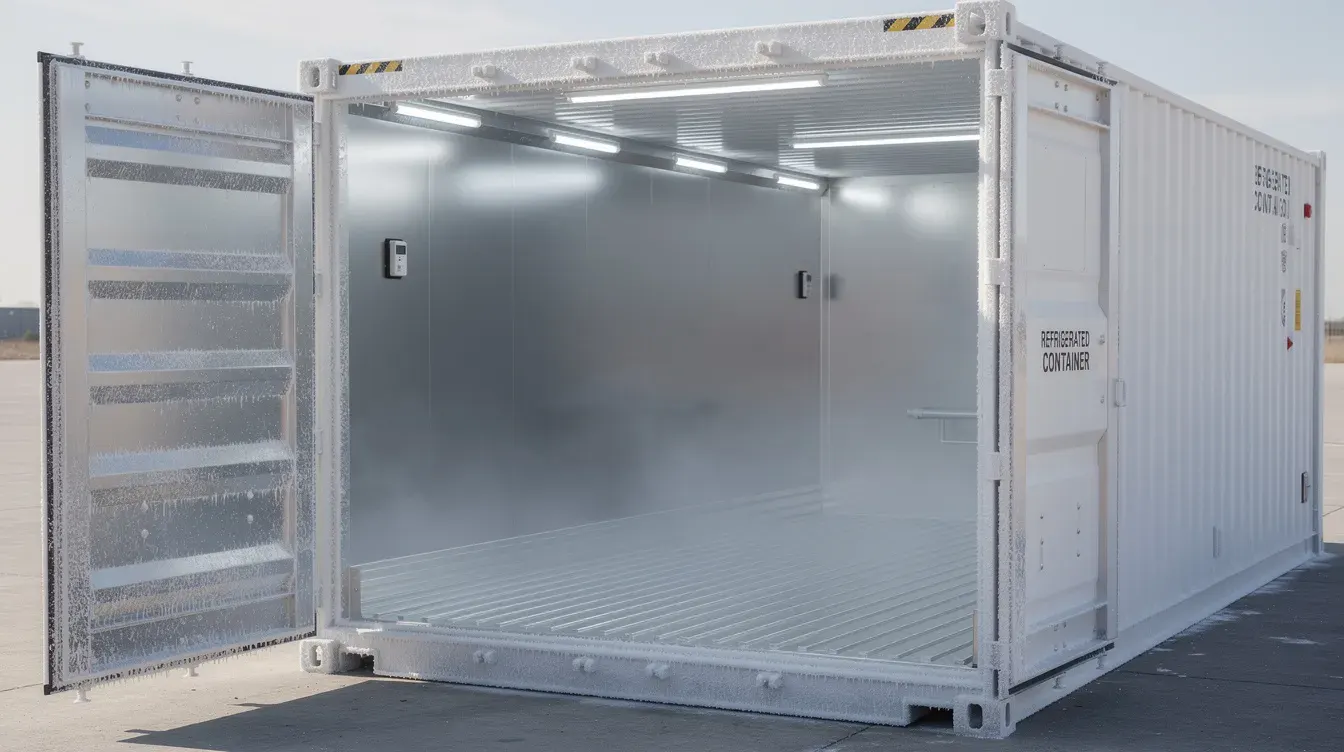
Global supply chain operations depend on temperature control for perishable goods. Fruits, meat, dairy, pharmaceuticals, and biologics require precise climate management during transit.
ISO Reefer
+25°C to -25°C
Most perishables
High Cube Reefer
Same range, extra volume
Bulk perishables
Blast Freezer
Rapid cooling
Meat & seafood
Super Freezer
-60°C
Sashimi-grade products
While Portable Office Cabin doesn't manufacture marine reefers, we integrate insulated container rooms, cold rooms, and food-grade prefab canteens for land-based applications. We can dock reefers to prefab buildings, creating integrated cold-chain warehouses and canteen storage.
Bulk, Liquid and Special Cargo Containers
Some cargo is too dense, fluid, or hazardous for standard dry containers. Dedicated bulk and tank units follow ISO frame standards externally while differing significantly in internal structure.
Half-Height Containers
Lower-profile, heavy-duty boxes for ore, coal, stones, and scrap metal. Lower centre of gravity improves stability. Easier loading by excavator without specialised equipment.
ISO Tank Containers
Cylindrical tanks within a 20 ft ISO frame, constructed from stainless steel. Used for food-grade liquids, chemicals, solvents, fuels, and liquefied gases. Safe filling: 80–95% capacity.
Swap Bodies
Non-stackable containers without upper corner fittings, primarily for road and rail in Europe. Convertible tops enable side and top loading. Growing in door-to-door distribution.
Regional Variations in Cargo Container Design
While ISO standards dominate international shipping, different regions have adapted container dimensions for local road limits, rail clearances, and pallet sizes.
North American 53 ft Containers
- • 48 ft (introduced ~1986) and 53 ft (since ~1989)
- • Often 102 in (2.59 m) wide, 9 ft 6 in high
- • Widely used on double-stack trains and trucks
- • Internal volume up to 60% greater than standard 40 ft
European Pallet-Wide Containers
- • Increased internal width (~2.44 m) with shallower corrugations
- • Accommodates two Euro pallets side by side
- • 45 ft pallet-wide High Cube replacing older swap bodies
- • Ideal for automotive, FMCG, and retail logistics
Australian & Japanese Containers
- • Australian RACE: slightly wider, sometimes 41 ft long
- • Optimised for Australian Standard Pallets
- • Japanese 12 ft: domestic freight on narrow-gauge rail
- • Demonstrate local infrastructure adaptation
The Rise of Containerization & Global Standards
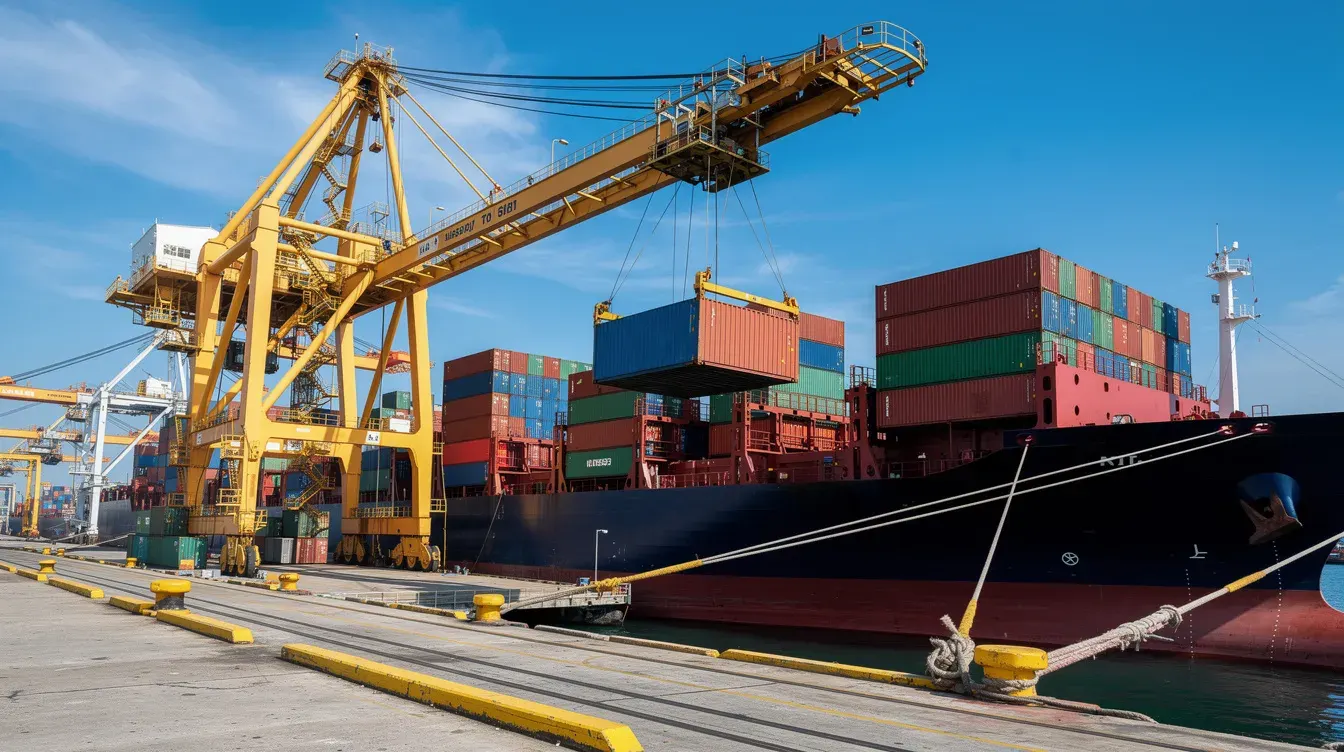
Container shipping transformed global trade through standardisation. Before containers, longshoremen manually handled individual crates, barrels, and boxes—consuming massive time and costs.
Key milestones:
- • 1932: Enola, Pennsylvania container terminal for rail freight
- • 1948–1952: US military "Transporter" and CONEX boxes
- • 1956: Malcolm McLean's first container vessel voyage
- • 1968–1970: Publication of ISO container standards
- • 1972: International Convention for Safe Containers (CSC)
Standardised dimensions, corner castings, and twistlocks enabled safe stacking, crane handling, and intermodal transport worldwide. Handling time decreased 27.3% while theft and damage dropped significantly inside sealed steel boxes. By the 2020s, mega-ships carrying over 19,000 TEU rely entirely on standardised containers.
Cargo Containers in the 2020–2026 Supply Chain
The COVID-19 pandemic exposed global dependence on container availability and port capacity. Container shortages, port congestion, and freight rate spikes affected Asia–Europe and trans-Pacific routes throughout 2020–2021.
Current Fleet
- • ~90% dry freight GP units
- • Predominantly 20 ft and 40 ft sizes
- • Growing High Cube share
- • Over 17 million containers globally
Modernisation Trends
- • Improved corrosion protection
- • RFID and GPS tracking
- • Smart containers with sensors
- • Enhanced security screening
India's Growth
- • Mundra, JNPT, Chennai throughput rising
- • Expanding ICDs and logistics parks
- • Growing container handling demand
- • POC supports with site offices & colonies
From Cargo Container to Modular Building
Container architecture emerged around 2000 as developers recognised the potential of repurposing used shipping containers for buildings. The same structural strength protecting freight during ocean voyages creates durable, relocatable structures on land.
Building types using containers:
Advantages for developers:
- • Fast deployment: typically 30–60 days from design to installation
- • Factory-controlled quality and consistent finishes
- • High structural strength from original container frame
- • Relocatability for project-based applications
- • Better value versus conventional RCC for short to medium-term projects
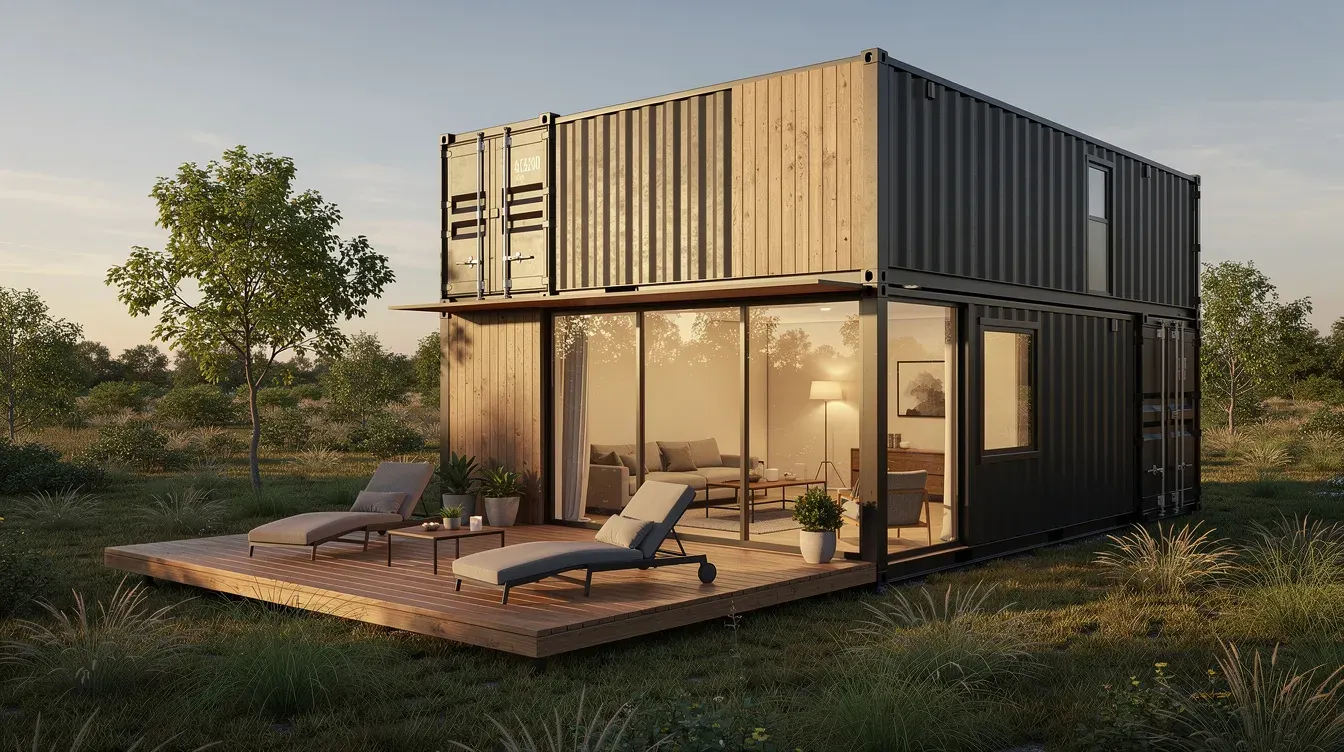
Container Offices & Project Site Infrastructure
Construction companies, infrastructure developers, and industrial plants across India rely on container-based offices for speed and flexibility. These units arrive fully fitted, connect to power, and begin operations within days rather than months.
20 ft Container Office
- • 2–4 workstations with small meeting area
- • Air conditioning, LED lighting, basic storage
- • Steel frame with insulated sandwich panels
- • Vinyl or laminate flooring
40 ft Container Office
- • 8–10 workstations with conference area
- • Manager's cabin and server nook
- • Multiple AC units for climate control
- • Concealed wiring and modular furniture
Popular configurations (2023–2026): Double-stacked site offices with external staircase, combined office plus store containers, and administration blocks from 4–10 joined containers for large infrastructure projects.
Container Homes, Labour Colonies & Accommodation
Container-based accommodation addresses both temporary labour housing and semi-permanent residential needs with standardised, scalable solutions.
Labour colonies for construction and industrial sites:
- • Dormitory layouts with bunk beds
- • Shared toilet and bathing facilities
- • Mess areas and recreational zones
- • Cross-ventilation and thermal insulation
- • Scalable from 20–30 workers to 500+ occupants
Premium container homes:
- • 1BHK, 2BHK, and studio layouts in 20 ft and 40 ft HC
- • Windows, sliding doors, modular kitchens
- • Premium bathrooms with modern fixtures
- • Deck extensions for outdoor living space
- • Applications: farmhouses, holiday homes, staff quarters
Container Cafés, Prefab Canteens & Rooftop Sheds
Container cafés and prefab canteens have emerged across Indian cities since approximately 2015, accelerating after 2020 for quick, flexible food and beverage setups.
20 ft Café Module
- • Front service counter with glazing
- • Back-of-house pantry with sink
- • Electrical for coffee machines, ovens
- • Food-grade finishes and ventilation
40 ft Canteen Module
- • Kitchen zone plus serving counter
- • Space for tables and seating
- • Connection to rooftop shed
- • Suitable for industrial canteens
Rooftop Sheds
- • Structural steel over containers
- • Shade and rain protection
- • Wind load and waterproofing design
- • Year-round operation
Portable Security Cabins, Toilets & Utility Modules
Security Cabins
- • 4×4 to 8×8 ft sizes
- • Three-side windows
- • Counter, fan/AC, lighting
Portable Toilets
- • Single or multi-cabin
- • FRP or sandwich panel
- • Anti-slip floor, ventilation
Guard & Power Rooms
- • Control rooms
- • Compressor rooms
- • Pump houses
Wash & Lab Blocks
- • Worker hygiene facilities
- • QC testing labs
- • Brand-customised modules
Design, Safety & Compliance When Reusing Cargo Containers
Structural assessment:
- • Evaluate container age, rust, and damage at corner posts and floor beams
- • Assess impact of cutting large openings on structural integrity
- • Install reinforcement frames around doors and windows
Health and comfort:
- • Remove or seal floors with potential pesticide residues
- • Add insulation (PUF, EPS, or rockwool panels) for Indian heat and monsoon conditions
- • Ensure proper ventilation and correctly sized HVAC
Fire and code compliance:
- • Use fire-rated panels or linings where required
- • Meet local building bylaws for offices, schools, or accommodation
- • Obtain necessary occupancy certifications
Services design:
- • Electrical safety with MCBs and proper earthing
- • Provision for IT cabling, CCTV, and access control
- • Plumbing, drainage, and rainwater management
Sustainability & Lifecycle Benefits
Container-based construction supports environmental objectives through resource efficiency and extended material lifecycles.
Extended container life
Repurposing decommissioned units
Reduced waste
Off-site fabrication minimises debris
Relocatable
Disassembly and reuse at new sites
Lower carbon
Vs new steel for time-bound projects
Portable Office Cabin supports relocation and reuse planning, buy-back options for certain unit types, design with recyclable materials, and rainwater harvesting around container colonies and rooftop sheds.
Energy performance:
- • Insulation and reflective roof critical for Indian climates
- • LED lighting reduces operational energy
- • Efficient HVAC design minimises power consumption
How to Choose the Right Cargo Container or Modular Solution
Selecting the appropriate container or modular solution requires systematic evaluation of your specific requirements.
Decision factors:
- • Purpose: shipping versus on-site building
- • Duration: temporary versus permanent installation
- • Space constraints and site access
- • Climate and insulation needs
- • Regulatory requirements and approvals
Step-by-step approach:
- Define capacity needs: TEU for shipping, occupants or workstations for buildings
- Select container type: GP, High Cube, or specialised
- Consider modifications: doors, windows, partitions, services
- Check transport logistics: crane accessibility and delivery route
- Plan for future: relocation capability or expansion potential
Portable Office Cabin guides customers through these steps, from concept and design through manufacturing, delivery, and installation across India. Prepare basic site data—location, access conditions, and layout sketches—before engaging to speed up proposals and costing.
Ready to Get Started with Cargo Containers?
Whether you need raw containers for storage, converted modular buildings, or complete prefab solutions, Portable Office Cabin delivers end-to-end services across India. With 10,000+ completed projects, we bring engineering expertise and reliable execution to every project.
Frequently Asked Questions
Customer Reviews
No reviews yet — be the first to share your experience.
No verified reviews yet for Cargo Containers – Types, Uses & Modular Building.
Related cargo containers Options
View All20ft & 40ft Storage Container – Corten Steel
20ft & 40ft steel storage containers — secure, weatherproof, relocatable
New & Used Shipping Container for Sale in India
New and used shipping containers for storage, offices, and modular projects
Cargo Container – Buy, Rent or Convert
Buy, rent, or convert cargo containers across India with delivery and fabrication support