
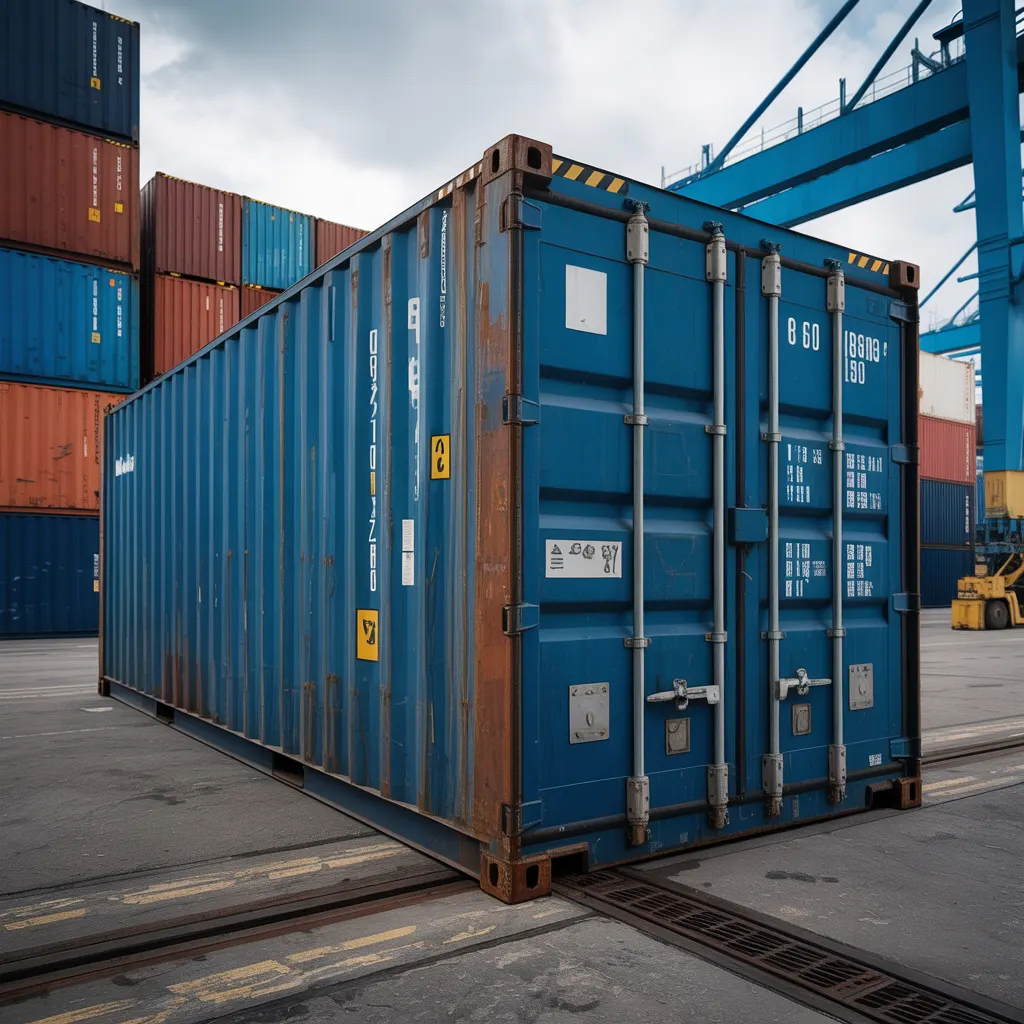
Cargo Container for Sale Bangalore
Cargo shipping container — ISO standardized steel boxes for intermodal freight transport and modular building conversions. 20ft, 40ft, and 40ft High Cube units available for offices, homes, labour colonies, and site facilities across India.
- Brand
- Portable Office Cabin
- Application
- Material & equipment storage, warehousing, logistics, site stores & secure on-site storage
- Steel Grade
- MS CR Sheet / CRCA Sheet — IS 513 & IS 2062 · Corten · ISO-Grade
- MSME Certified
- UDYAM-TN-11-0068545
* Price may vary based on customization and delivery location
Key Features
- ISO 668 compliant — compatible with every port, rail terminal, and truck chassis worldwide
- Corten weathering steel construction with self-passivating rust patina for 25–50 year lifespan
- CSC-certified with safety plate showing max gross weight, stacking limits, and racking strength
- Available as dry storage, high cube, reefer, open top, flat rack, and tank configurations
- Converts into offices, homes, labour colonies, cafés, security cabins, and rooftop sheds
- 50–70% faster deployment and 40–60% cost savings versus traditional masonry construction
- One-trip, cargo-worthy, WWT, and as-is condition grades available
- Pan-India delivery with crane installation from Portable Office Cabin
Specifications
| Standard Sizes | 20 ft GP, 40 ft GP, 40 ft High Cube |
| Standards | ISO 668, ISO 6346, CSC 1972 |
| Material | Corten Weathering Steel (2–4 mm sidewalls) |
| 20 ft Volume | ~33 m³ (1 TEU) |
| 40 ft Volume | ~67 m³ (2 TEU) |
| 40 ft HC Volume | ~76 m³ |
| Max Payload (20 ft) | 28,280 kg |
| Floor Load | 7.1 tons/m² |
| Stacking | Up to 9 high with twistlocks |
Cargo Shipping Container: Types, Sizes, Uses & Modular Conversions
The cargo shipping container is one of the most transformative inventions in the history of global trade. On April 23, 1956, Malcolm McLean's SS Ideal X departed Newark, New Jersey, carrying 58 aluminum truck bodies—the earliest commercial shipping containers—bound for Houston, Texas. That single voyage slashed loading costs from $5.86 per ton to just 16 cents and set the stage for a logistics revolution.
By 1968–1970, the International Organization for Standardization (ISO) had established standards under ISO 668 for dimensions and ISO 6346 for identification codes. Today, over 90% of non-bulk cargo worldwide moves in these standardized steel boxes, predominantly 20-foot and 40-foot units stacked aboard massive vessels and hauled across continents by rail and truck.
At Portable Office Cabin, we work with ISO containers for both freight purposes and prefabricated conversions—transforming these rugged structures into offices, homes, labour colonies, and site facilities across India.
Quick Answer: Choosing the Right Cargo Shipping Container
General cargo (textiles, machinery, consumer goods)
20 ft or 40 ft dry storage containers
Perishable goods (food, pharmaceuticals, flowers)
Refrigerated containers (-30°C to +30°C)
Oversized or heavy goods (turbines, vehicles)
Flat rack or open top containers
Liquid or chemical shipment
Tank containers with stainless steel linings
On-site office space
Converted 20 ft or 40 ft with insulation and MEP
Labour housing near project sites
Prefab container accommodation in 40 ft HC units
Standard containers share an 8 ft (2.44 m) width. Heights are either 8 ft 6 in (2.59 m) for standard units or 9 ft 6 in (2.89 m) for high cube containers. Payload limits typically reach 28–30 tons, though Indian road regulations under the Motor Vehicles Act cap axle loads at 10–12 tons per axle.
What Is a Cargo Shipping Container?
A cargo shipping container—also called an intermodal container or ISO container—is a standardized, stackable steel box engineered for seamless transfer between ship, rail, and truck without unloading the cargo inside. Approximately 95% of the global container fleet complies with ISO standards, ensuring compatibility at ports from Mumbai to Rotterdam.
The structure relies on corrugated steel sidewalls (typically 2–4 mm thick corten weathering steel that forms a protective rust patina), plywood or steel floors rated for 7.5–9 tons per square meter, and double doors with multi-point locking bars. Every container carries a CSC plate (International Convention for Safe Containers) showing maximum gross weight, stacking limit, racking strength, and manufacture date.
Typical payloads include manufactured goods shipped through Indian ports like Nhava Sheva (JNPT), Mundra, and Chennai. For example, a 40 ft high cube might carry 20–25 tons of automotive parts from Mumbai to Rotterdam, secured with lashing and braced internally, traveling over 12,000 km in 25–30 days without exposure to the elements.
Brief History of Cargo Containers & Containerization
Before standardization, international shipping relied on break bulk cargo—varied crates, barrels, and sacks loaded by hand. A single vessel could take days to load, with high damage and theft rates.
The commercial breakthrough came in 1955–1956 when trucking magnate Malcolm McLean partnered with engineer Keith Tantlinger to design 8 ft wide × 8 ft high corrugated steel boxes with twistlock fittings. The SS Ideal X voyage in April 1956 carried 58 such containers.
ISO 668 arrived in 1968, defining 20 ft and 40 ft as standard lengths. The 1972 International Convention for Safe Containers (CSC) mandated safety approval plates. Loading times dropped from 100+ hours to under 24 hours, and handling costs fell by a factor of 30.
Today, containers underpin over 90% of non-bulk global trade and have found new life as modular buildings—a development Portable Office Cabin leverages across India.
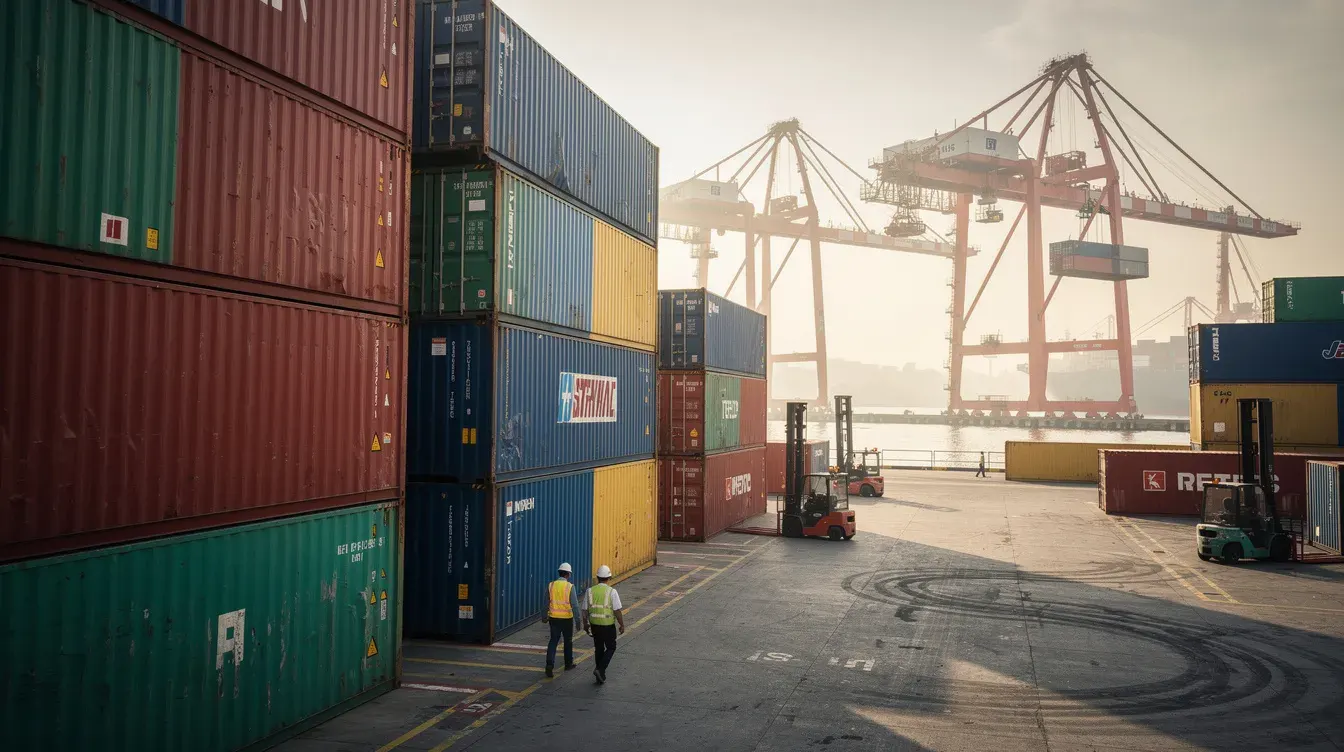
Standard Sizes & Specifications
Most cargo containers follow ISO 668 and CSC rules, ensuring interoperability at every port, rail terminal, and trucking depot worldwide.
| Size | External Dimensions | Volume | Tare Weight | Max Payload |
|---|---|---|---|---|
| 20 ft GP | 6.058 × 2.438 × 2.591 m | ~33 m³ (1 TEU) | 2,200 kg | 28,280 kg |
| 40 ft GP | 12.192 × 2.438 × 2.591 m | ~67 m³ (2 TEU) | 3,800 kg | 28,700 kg |
| 40 ft HC | 12.192 × 2.438 × 2.896 m | ~76 m³ | 4,800 kg | 27,700 kg |
Key Structural Features
- • Eight ISO corner castings (215 × 215 × 178 mm) allow stacking up to 9 high
- • Forklift pockets on 20 ft bases enable easy loading
- • Floor load ratings reach 7.1 tons/m² uniformly
- • High Cube extra headroom ideal for insulation and ceiling finishes
Weight Specifications
- • Tare weight: 2,200 kg (20 ft) to 4,800 kg (40 ft HC)
- • Max gross weight: 30,480 kg (20 ft) to 32,500 kg (40 ft HC)
- • Indian road regulations may impose lower limits per axle config
Main Types of Cargo Shipping Containers
Dry Storage (GP)
Standard corrugated steel for general cargo — consumer goods, textiles, machinery, electronics
High Cube
30 cm extra height for bulky cargo or conversion projects needing ceiling clearance
Reefer (Refrigerated)
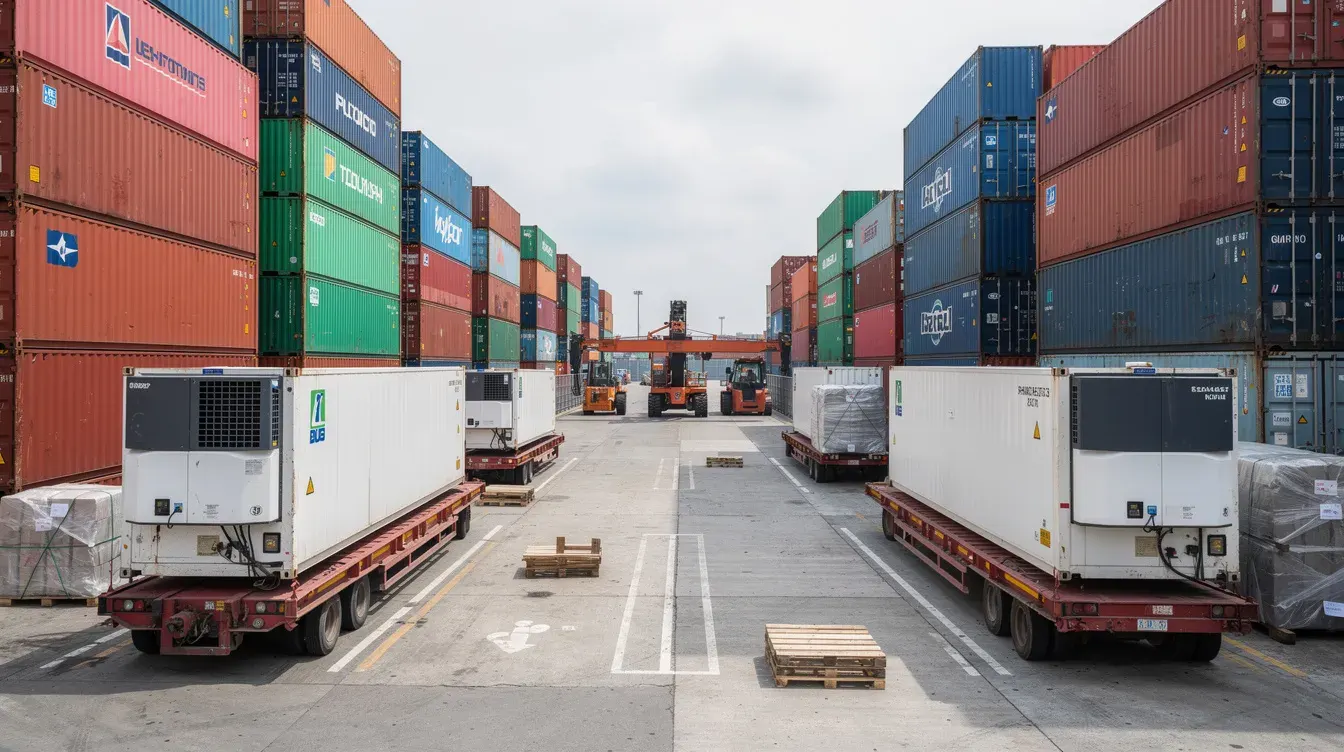
Temperature control from -30°C to +30°C for perishables, pharmaceuticals, vaccines
Open Top
Tarpaulin covers for tall project cargo — timber, machinery, steel coils requiring crane loading
Flat Rack
Collapsible or fixed ends for oversized loads — turbines, vehicles, heavy machinery up to 60 tons
Tank Container
Stainless steel tanks for liquid cargo — chemicals, food-grade liquids, gases (21,000–26,000 L)
Side-open containers: Full-wall access via sliding doors enables easy loading and unloading of palletized goods.
Half-height & bulk containers: Shorter walls (4'3"–4'10") for dense materials — coal, ore, aggregates.
Regional variations: European 45 ft pallet-wide High Cubes, North American 48/53 ft units, Japanese compact 12 ft units for local rail.
Securing, Safety & International Standards
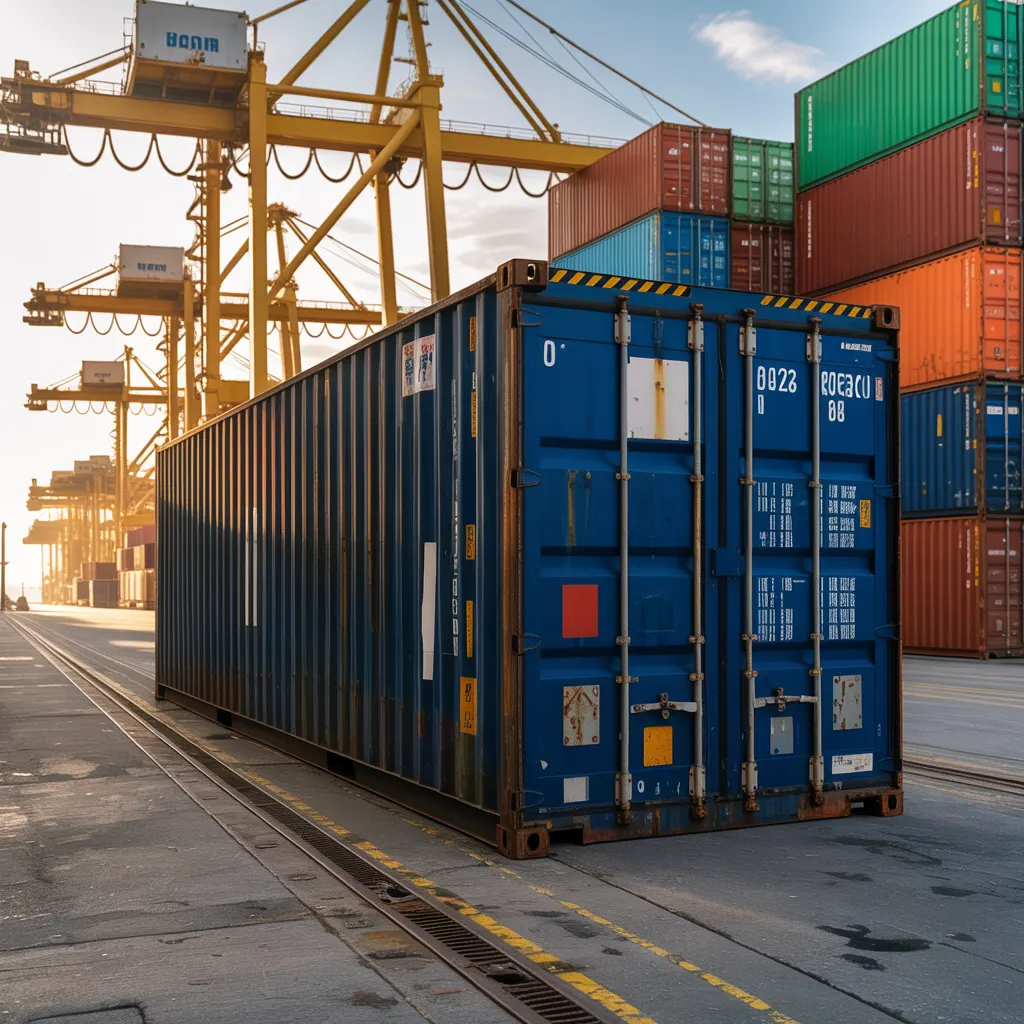
Safety standards matter because containers endure extreme conditions: stacked up to 11 high on vessels, vibrating across long distances on rail, and bouncing over rough roads on trucks.
CSC Certification
- • Maximum gross weight (e.g., 30,480 kg)
- • Transverse racking strength (30–50 kN)
- • Stacking weight per corner (up to 865 kN)
- • Re-inspection every 30 months
Security Measures
- • Bolt seals and high-security locks
- • GPS-enabled reefer monitoring
- • Lashing rods and turnbuckles (2–10 ton SWL)
- • Indian Customs X-ray and radiation scanning at JNPT
From Cargo Shipping Containers to Modular Buildings
Since the 1990s, surplus "wind-and-water-tight" containers—those past their 10–15 year sea life—have been repurposed into buildings. What began as creative reuse has evolved into purpose-built modular construction.
Portable Office Cabin specializes in converting ISO cargo containers and fabricating container-like modules for clients across India. All conversions comply with NBC 2016 building codes and relevant fire safety standards. We mitigate thermal bridging through spray foam or PIR insulation systems, achieving R-values exceeding 20 for comfortable interiors.
Container Offices & Site Facilities
Container offices are fully equipped, relocatable workspaces built from 20 ft and 40 ft cargo containers. They provide immediate infrastructure for construction sites, industrial operations, and temporary project needs.
Typical Configurations
- • 20 ft (15–20 m²): Site engineer office with desk, AC, optional toilet
- • 40 ft (30–35 m²): 8–10 workstations with central aisle
- • Double-stacked: Two-level offices with internal stairs (60+ m²)
Standard Features
- • 50–100 mm PU foam insulation (R-20+)
- • 2–5 ton split AC units
- • 36W/m² LED lighting & Cat6 LAN cabling
- • Grilled windows, MCB distribution boards
Prefab Labour Colonies & Worker Accommodation
Labour colonies built from cargo containers offer the fastest way to house large workforces near project sites. Portable Office Cabin delivers complete accommodation solutions for road, metro rail, industrial plant, and warehousing projects across India.
| Factor | Container Colony | Traditional Masonry |
|---|---|---|
| Deployment time | 4–6 weeks | 3–6 months |
| Cost savings | 40–60% lower | Baseline |
| Relocation | Crane and flatbed | Demolition required |
| End-of-project waste | Near zero | Significant debris |
Container Homes, Cafés & Rooftop Conversions
Container Homes
- • Studio to 2BHK layouts (20–40 ft HC)
- • 100 mm PIR insulation (U-value 0.25)
- • UPVC double-glazed windows
- • Farmhouses, holiday homes, staff quarters
Container Cafés
- • 10 ft kiosks to 40 ft HC full-scale cafés
- • Kitchen zone + serving counter
- • Food-grade finishes & ventilation
- • Corporate campuses, highways, colleges
Rooftop Conversions
- • Lightweight units (5–7 tons) crane-lifted
- • Min 300 mm RCC slab requirement
- • Lounges, meeting rooms, cafeterias
- • No major civil work needed
Security Cabins, Toilets & Utility Modules
Security Guard Cabins
- • Windows on 3 sides for 270° visibility
- • Counter desk for visitor registration
- • Fan or 1.5 ton AC provision
- • Factory gates, toll plazas, parking lots
Portable Toilet Blocks
- • Single or multi-stall (2–6 units)
- • Integrated 500–1,000 L water tank
- • Bio-digester or septic options
- • Construction sites, outdoor events
Specialised Modules
- • First-aid rooms and medical bays
- • Tool storage and workshops
- • Power control rooms
- • Ticket booths and kiosks
Benefits of Using Cargo Containers & Modular Solutions
Container Condition Grades
| Grade | Description | Best For |
|---|---|---|
| One-trip (New) | Single voyage from factory | High-end conversions, homes |
| Cargo-worthy (CW) | Certified for international shipping | Continued freight use |
| Wind-and-water-tight (WWT) | Structurally sound, no longer CSC certified | Modular buildings, storage |
| As-is | May have damage or rust | Budget storage only |
Global Supply Chain & Container Availability (2020–Present)
The COVID-19 pandemic starting in early 2020 disrupted global shipping schedules dramatically. Container queues at Los Angeles/Long Beach saw 100+ ships at anchor; 40 ft HC freight rates jumped from $1,500 pre-pandemic to $10,000+ per FEU in 2021.
By 2023, conditions stabilized with rates settling to $2,000–$3,000 per FEU. Portable Office Cabin addresses supply chain variability by working with both containerized modules and fabricated-to-spec prefab systems—ensuring project timelines remain achievable regardless of market conditions.
Work with Portable Office Cabin
Whether you need to ship goods across oceans or build a complete site facility, the cargo shipping container offers proven versatility. Share your project requirements for a tailored container or prefab proposal.
Frequently Asked Questions
Customer Reviews
No reviews yet — be the first to share your experience.
No verified reviews yet for Cargo Container for Sale Bangalore.
Related cargo shipping container for sale Bangalore Options
View All20ft & 40ft Storage Container – Corten Steel
20ft & 40ft steel storage containers — secure, weatherproof, relocatable
New & Used Shipping Container for Sale in India
New and used shipping containers for storage, offices, and modular projects
Cargo Container – Buy, Rent or Convert
Buy, rent, or convert cargo containers across India with delivery and fabrication support